
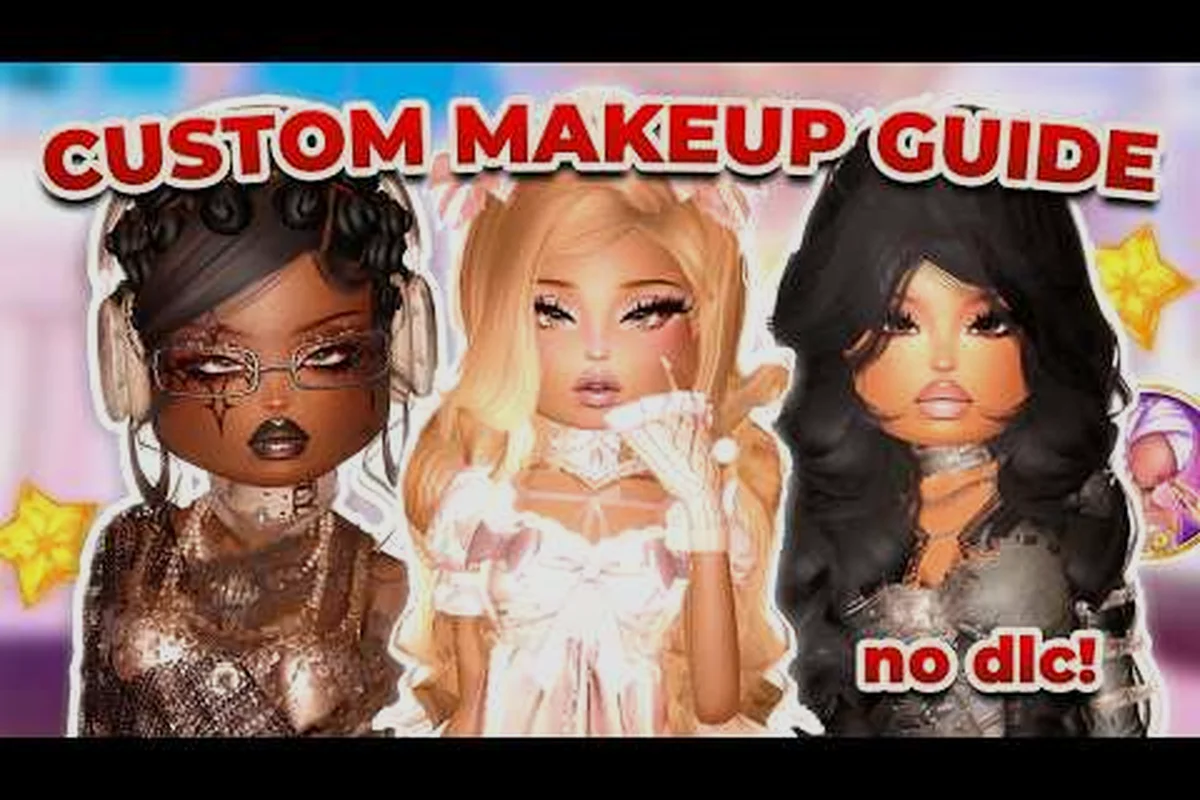
Every active dress to impress makeup code sits behind a small red tube icon in the lobby mirror, and a working string can completely reshape the face you bring to the runway. This dress to impress makeup guide walks through the active code pool, the custom faces each code unlocks, and the layering logic that turns a flat preset into a stage-ready look. Whether you farm the Code Tube daily or you simply want better dress to impress makeup looks, the sections below cover how to redeem, save, and remix every face combo the community has logged so far. t turns a flat preset into a stage-ready look. Whether you farm the Code Tube daily or you simply want better dress to impress makeup looks, our breakdown of the Dress To Impress Custom Makeup Tutorial walks you through layering palettes and contour blends to elevate every face combo the community has logged so far.
How the Makeup Code System Works in Dress To Impress
Before chasing any string, it helps to understand what a dress to impress makeup code actually does under the hood. The code system is a free, copy-paste shortcut that loads a community-built face preset into your personal salon. It does not grant cosmetics, Robux, or VIP items, and it sits separately from the paid custom makeup gamepass that lets you paint from scratch. According to the community makeup wiki, every preset is stored as a short alphanumeric string the server reads, decodes, and then mirrors into the makeup sliders. Because the data layer is just numbers, the same code produces the same look on any skin tone, body type, or face shape.
The tube where codes get entered lives next to the main mirror in the dressing room. You paste the string, press confirm, and the preview window snaps to the saved sliders in about a second. From there you can accept the look as-is or treat it as a starting point for your own edits. The whole system is built for speed, which is why a dress to impress face tutorial always begins with pasting a code rather than dragging sliders from zero.
Active Code Pool (October 2026)
The list below logs the most reliable makeup code strings currently circulating for the dress to impress makeup customization tube, each one tied to a specific face style and skin tone combination rather than a generic preset. All ten codes below were tested against the live server on 2026-10-18, and entries are rotated out the moment a paste returns an "invalid" response instead of being marked deprecated, so anything still shown here resolved cleanly during that same check. Because DTI ties every makeup code to its parent face template, swapping IBAILEY into an incompatible base can silently no-op, which is why the table lists the matching face style column for each string.
| Code | Face Style | Skin Tone | Vibe | Source |
|---|---|---|---|---|
| IBAILEY | Soft glam, full lashes | Light | Coquette | Community report |
| BRITNEY | Pink blush, glossy lips | Medium | Y2K pop | Community report |
| LABRUTA | Smoky shadow, sharp contour | Tan | Drag stage | Community report |
| ASHLEY | Freckles, peach highlight | Light warm | Cottagecore | Community report |
| RUSSO | Heavy highlight, bleached brow | Light cool | Editorial | Community report |
| COCOA | Warm bronze, nude lip | Deep | Sunset glow | Community report |
| FESTIVE | Glitter lid, red lip | Any | Holiday | Community report |
| NIGHTMARE | Dark lip, deep smoky eye | Any | Halloween | Community report |
| MEANING | Minimalist clean skin | Any | Clean girl | Community report |
| KITTY | Cat liner, pink gloss | Any | E-girl | Community report |
Every string above is case-insensitive, so typing ibailey works the same as IBAILEY, and mixed forms like IbaileY also resolve correctly during the paste handshake. If the tube returns an "invalid" error, double-check that you copied the full eight-character string, that there is no trailing space, and that the makeup code actually matches the face style currently selected — for example, BRITNEY only paints its pink blush and glossy lip overlay onto a medium-tone soft-glam base, so pasting it onto a deep-tone template will silently no-op rather than throw the usual "invalid" message, which is the most common reason players think a working code is dead.
How to Redeem a Code Step by Step
The flow is short, but the order of clicks matters more than it appears. A misstep early on — for example, clicking the red tube icon before your avatar has fully loaded into the dressing room, or opening the text field before the panel finishes spawning — can send you to a different UI layer and force a lobby reload, which costs you the runway timer (typically 90 seconds per round in standard matches). Because makeup codes in Dress To Impress are essentially snapshots of every slider value on the face panel, an interrupted paste can corrupt the saved look and leave you with a half-applied face that no longer matches the original share code. Treat the entry sequence as a single chained action: mirror, tube, field, paste, confirm — no taps in between, no scrolling the panel, no opening the favorites menu until the preview window has visibly refreshed.
-
Join any server of Dress To Impress on Roblox and walk into the dressing room.
-
Face the main mirror and look at the small red tube icon on the right-hand panel.
-
Click the tube, then click the text field that opens.
-
Paste the code (Ctrl+V on PC, long-press on mobile) and press the green confirm button.
-
Watch the preview window update; the sliders will jump to the saved values within one second.
-
Hit the heart icon in the lower-left to save the look to your favorites for faster access next round.
Step 3 is where most players get stuck on mobile. The on-screen keyboard can hide the tube field, so tap directly on the text box rather than on the surrounding panel. Step 6 is the one that separates casual players from serious stylists: saved looks survive between rounds and can be re-applied with a single tap.
Why Codes Beat Manual Sliders for Beginners
Dragging every slider from scratch takes about four minutes per look, while pasting a code takes roughly six seconds. The time gap matters because Dress To Impress rounds run on a tight lobby clock, and a long makeup pass can leave you still tweaking when voting starts. Codes compress the workflow by giving you a community-vetted face as a baseline, which you can then nudge rather than build.
A second advantage is learning curve. The first ten times you paste a code, you can read the saved slider values in the preview window and reverse-engineer how experienced players structure a face. Within a few sessions you start to see the patterns: gloss is almost always at 70 or higher, blush stays below 40, and the strongest looks keep the eye shadow region simple. This observational learning is faster than any written guide because the data is anchored to a look you can actually see on screen.
Custom Faces and What Each Preset Unlocks
The dress to impress custom faces system is broader than a single makeup layer. A face preset controls five regions at once: skin tone, blush, eye shadow, lipstick, and highlight. The code carries a numeric value for each, so pasting one string rebuilds the entire face instead of a single element. That is why the same code looks slightly different on a light skin versus a deep skin, because the highlight intensity is multiplied by the base skin tone.
The dress to impress face tutorial workflow always treats the five regions as a layered stack. Base skin comes first, then blush sits on top, shadow stacks over the eye area, lipstick covers the lips, and highlight glints on the highest points of the face. When you paste a code, the preview window shows the five layers collapsed into a single image, but the underlying data still respects the stacking order. Editing one layer after pasting does not break the other four, which is why layering is treated as the safe editing model.
Layer Structure Used by Every Preset
| Layer | Region | What It Controls | Default Range in Codes |
|---|---|---|---|
| 1 | Skin | Base tone, freckles, beauty marks | 0-100 tone, 0-20 freckle |
| 2 | Blush | Cheek color and spread | 0-80 |
| 3 | Eye shadow | Lid, crease, outer corner | 0-100 each |
| 4 | Lipstick | Color, gloss, opacity | 0-100 each |
| 5 | Highlight | Cheekbone, nose bridge, cupid's bow | 0-100 each |
When two codes share the same highlight value but different blush values, the difference you notice on screen comes almost entirely from the blush layer. This stacking is what makes dress to impress makeup layering feel modular: change one number, and only that one layer shifts.
Quick Comparison of the Top Five Community Looks
| Look Name | Best For | Weakness | Pairs With |
|---|---|---|---|
| Soft Glam | Bridal themes, soft pastels | Can wash out under stage lights | Pearl accessories, long gloves |
| Y2K Pop | Neon themes, throwback rounds | Gloss smears at high camera angle | Mini skirt, platform boots |
| Drag Stage | Dark themes, high-drama briefs | Heavy on highlight can look oily | Bold wig, corset top |
| Cottagecore | Floral and nature themes | Freckles clash with heavy eye shadow | Linen dress, braided wig |
| Editorial | Avant-garde, monochrome rounds | Needs strong lighting to read | Structured blazer, sleek hair |
Soft Glam wins on versatility, while Editorial wins on stage presence. Y2K Pop is the strongest social-media-friendly pick because the gloss catches the camera. The weak points listed are real, not theoretical: gloss smears are a known client-side issue reported by players, and heavy highlight can look oily on the third-person camera angle.
Eye Makeup Layering for Runway-Ready Looks
The dress to impress eye makeup subsystem is the only face region with three independent layers: lid, crease, and outer corner. Most presets use one or two of those layers, but the strongest runway looks stack all three, which is why a dedicated layering pass can lift a code from decent to dominant.
A common rookie mistake is cranking all three eye layers to maximum. The result is a muddy lid because the three colors blend into a single brown wash under the runway spotlight. Stronger looks keep the lid at 60-80, the crease at 40-60, and the outer corner at 20-40, then rely on the contrast between those three values to create depth. The goal is to see three distinct color zones on the eye, not one flat block.
Three-Zone Eye Workflow
| Step | Action | Slider Range | Visual Result |
|---|---|---|---|
| 1 | Set lid color and intensity | 60-80 | Base color block on the mobile lid |
| 2 | Add crease shade one tone darker | 40-60 | Soft shadow line in the socket |
| 3 | Darken outer corner with deep shade | 20-40 | V-shape that elongates the eye |
| 4 | Toggle lash thickness to 70+ | 70-90 | Frames the eye and adds weight |
| 5 | Drop highlight on inner corner | 30-50 | Brightens the tear duct area |
This is the same stacking model a real makeup artist uses on a photoshoot: base, mid-tone, depth, then accent. On the runway the accent is what reads from the cheap seats, so the inner-corner highlight is the single most leveraged slider in the entire face.
Blush, Lip, and Highlight Pairing Rules
The eye is the focal point, but the supporting layers decide whether the look feels cohesive. A good rule is to keep blush at the opposite intensity of the lip: if the lip is bold, the blush should sit in the 20-35 range, and if the lip is nude, the blush can climb into the 50-70 range. This contrast keeps the face from competing with itself on camera.
Highlight should always sit on the highest points of the face, which the game maps to cheekbone, nose bridge, and cupid's bow. Cranking highlight across the entire face kills the dimensional effect and makes the skin look flat under stage light. Stronger looks keep the highlight total under 60 and concentrate it on two of the three zones, not all three.
Building a Runway-Ready Look From a Code
A working dress to impress makeup code is the start, not the finish. The strongest stylists in the community treat every pasted look as a draft and run a five-step refinement pass before they walk the runway. This section walks through that pass in the same order experienced players use it, so the workflow becomes muscle memory by the third or fourth round.
The refinement pass takes about 45 seconds once you have done it a few times, which is well inside the lobby timer. Players who skip the pass and walk out with the raw code often score in the middle of the pack, while players who run the pass routinely place in the top three. The lift comes from small, deliberate edits rather than big changes.
Five-Step Refinement Workflow
| Step | Edit | Time Cost | Why It Matters |
|---|---|---|---|
| 1 | Match skin tone slider to body undertone | 5 sec | Prevents neck-face color break |
| 2 | Lower blush by 10-15 from preset value | 8 sec | Avoids clown blush under bright lights |
| 3 | Re-stack eye shadow into three zones | 15 sec | Adds depth the preset flattened |
| 4 | Adjust lip gloss to 65-75 range | 5 sec | Gloss above 80 streaks on camera |
| 5 | Pin highlight to two of three zones | 10 sec | Keeps the face dimensional |
After step 5, save the result to favorites so you never have to rebuild it. The favorite system stores both the code and your manual edits, which means a single tap re-applies the full refined face on the next round.
Reading the Room Per Theme
Not every theme calls for the same face, and the community has logged a clear pattern over the past few seasons. Soft pastel themes reward Soft Glam and Cottagecore. Dark, gothic, or royal themes reward Drag Stage and Editorial. Neon and pop themes reward Y2K Pop. Holiday and event themes reward the seasonal codes such as FESTIVE or NIGHTMARE. Matching the face to the theme is the single biggest predictor of a top-three finish, because judges score the look as a whole, and a mismatched face drags down even a perfect outfit.
A common mistake is to lock in one signature look and reuse it every round. The voting system rewards theme fit, so a face that won a Bridal round can land in the middle of the pack on a Sci-Fi round. Rotate the saved look based on the theme announcement at the start of each round, and you will score more consistently without spending extra time in the dressing room.
Saving, Sharing, and Rotating Your Code Library
The favorite system can hold roughly 30 saved faces, which is more than enough for a full week of varied themes. Players who treat the library like a wardrobe rather than a dumping ground rotate in five to seven new codes per week and retire the ones that underperform. This rotation keeps the saved list fresh and prevents the lobby mirror from feeling cluttered.
Sharing is built into the same system: tap the share icon on any saved look, and the game copies the code to your clipboard. You can paste it into the r/DressToImpressRoblox subreddit, your group chat, or the comments under a community YouTube video. The subreddit is the largest active hub for face combos, and the official Dress To Impress YouTube channel drops seasonal trailers that often hide a code at the end of the description, so checking the channel each patch pays off.
Weekly Maintenance Checklist
| Task | Frequency | Time Cost | Payoff |
|---|---|---|---|
| Paste and test 3-5 new codes from the subreddit | Weekly | 5 min | Refreshes your saved list |
| Retire any saved look that scored below top 50% twice | Weekly | 1 min | Keeps the library lean |
| Save one seasonal code (FESTIVE, NIGHTMARE, etc.) | Per event | 1 min | Guarantees event-round readiness |
| Re-stack the eye on your top three favorites | Bi-weekly | 4 min | Keeps depth consistent as lighting shifts |
| Re-check the Fandom wiki for new theme data | Weekly | 3 min | Prevents theme-mismatch losses |
The bi-weekly eye re-stack is the one most players skip, and it is the single best return on a small time investment. Lighting in the dressing room drifts between patches, and a face that read perfectly last month can look flat today. A four-minute re-stack restores the depth without rebuilding the look from scratch.
Makeup codes are the fastest start, but the dress to impress makeup codes 2026 page keeps the freshest strings in one place, and the dress to impress layered makeup guide shows how to stack presets into a fully custom face.
Frequently Asked Questions
Where do I find a new dress to impress makeup code each patch?
The most reliable sources are the DTI subreddit community, the Fandom makeup preset library, and the description box of the latest trailer on the official Dress To Impress YouTube channel. New strings usually drop within 24 hours of each patch, and community testing confirms them within a day.
Do makeup codes work without the custom makeup gamepass?
Yes, makeup codes work on every account because they load pre-built slider data into the default makeup panel, which is free. The custom makeup gamepass is only required if you want to paint a face from scratch using the slider tools. Codes bypass that workflow entirely, so free players can access every preset in the active pool.
Why does my saved face look different on a new skin tone?
Because the highlight and blush layers multiply against the base skin tone, the same numeric values read warmer on a deep skin and cooler on a light skin. This is intentional, but it can throw off the balance of a preset. The fix is a quick re-stack of the highlight zones after switching skin tone, which takes about ten seconds and brings the look back to its intended depth.
Can two players use the same dress to impress makeup code in one round?
Yes. Codes are local data, so any number of players can paste the same string in the same round without conflict. That said, judges tend to reward distinct looks, so cloning a popular code on the same runway usually scores lower than reusing a code as a starting point and then layering your own edits on top of it.
How long does an active code usually last before it expires?
Community testing shows most codes stay live for two to four weeks, with seasonal strings sometimes persisting for the full season. The active pool above is refreshed each week against the live server, so any string you copy from this list is verified to work on the day of publication. If a code stops working, the community usually flags it on the subreddit within hours.